Featured Projects
LighTL - AI Novel Translation Platform
An AI-powered novel translation SaaS application designed and developed from concept to MVP. The platform uses a multi-stage LLM translation pipeline to deliver high-quality translations of novels across languages.
Key features include:
- Multi-stage LLM translation pipeline using Microsoft Semantic Kernel and OpenAI APIs with token optimization strategies
- Full-stack Blazor Server (.NET 10) application with PostgreSQL database
- Stripe payment integration for subscription management
- OAuth authentication supporting Google, Facebook, and Microsoft
- Web scraping system for novel platforms with rate limiting and proxy rotation
Role and Contribution
As the sole founder and developer of this SaaS product:
- Designed the entire system architecture from concept to MVP
- Built multi-stage LLM translation pipeline with token optimization strategies
- Implemented full-stack application with authentication, payments, and database
- Developed web scraping infrastructure with rate limiting and proxy rotation
Technologies Used
C#, .NET 10, Blazor Server, PostgreSQL, Microsoft Semantic Kernel, OpenAI API, Stripe, OAuth
High-Performance Log Management System
This enterprise-grade log management system was designed to handle massive volumes of log data with exceptional performance. The system includes a custom-built indexing engine optimized for high-throughput ingestion while maintaining remarkably fast search capabilities across terabytes of log data.
Key features include:
- Custom high-performance indexing algorithm optimized for log data
- Specialized query language for complex log searches
- Node-based processing pipeline for customizable log processing
- High-throughput log ingestion with optimized indexing
- Advanced visualization and reporting capabilities
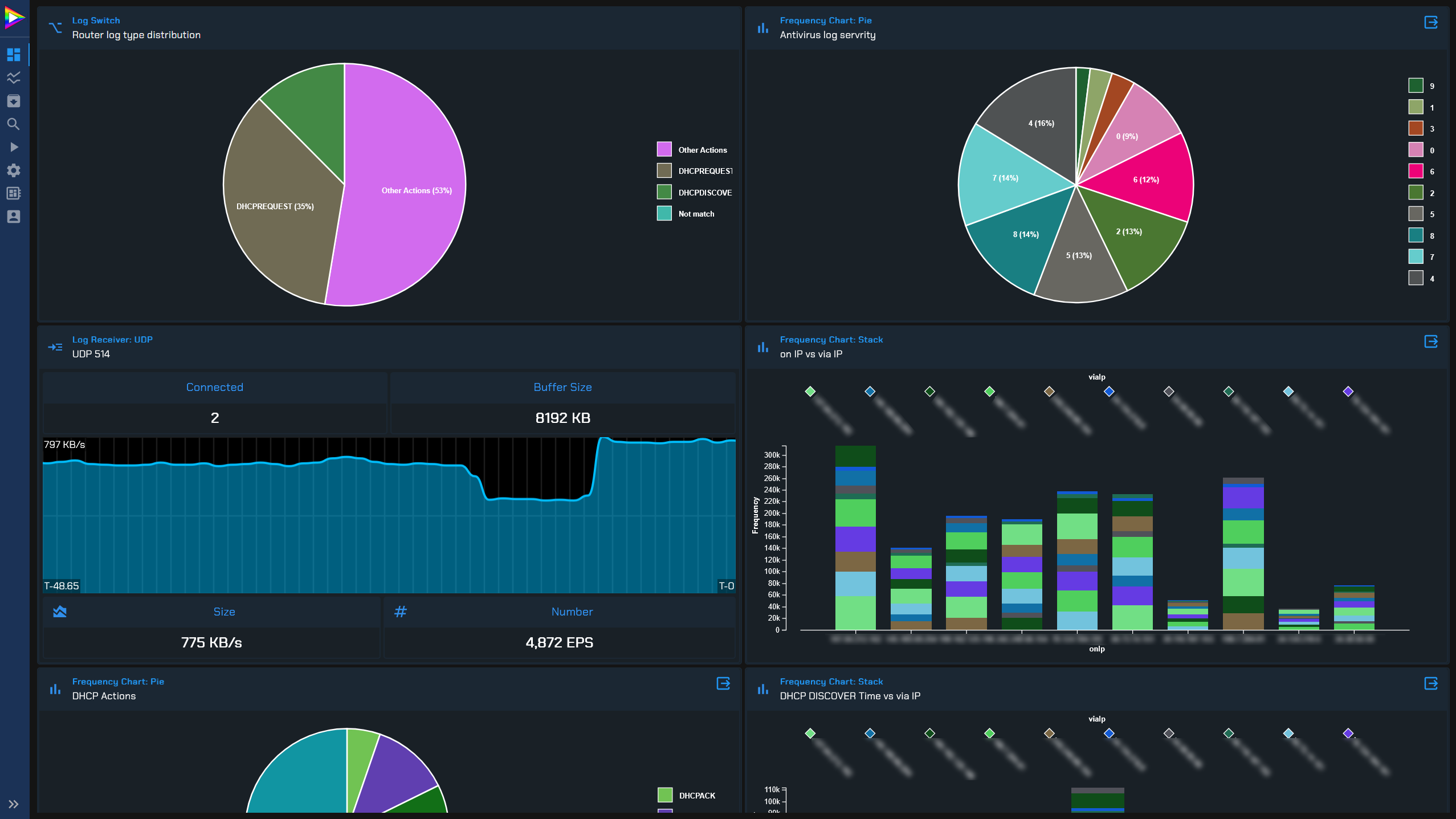
Operational Dashboard
Real-time overview of network activity and log data with interactive charts and metrics
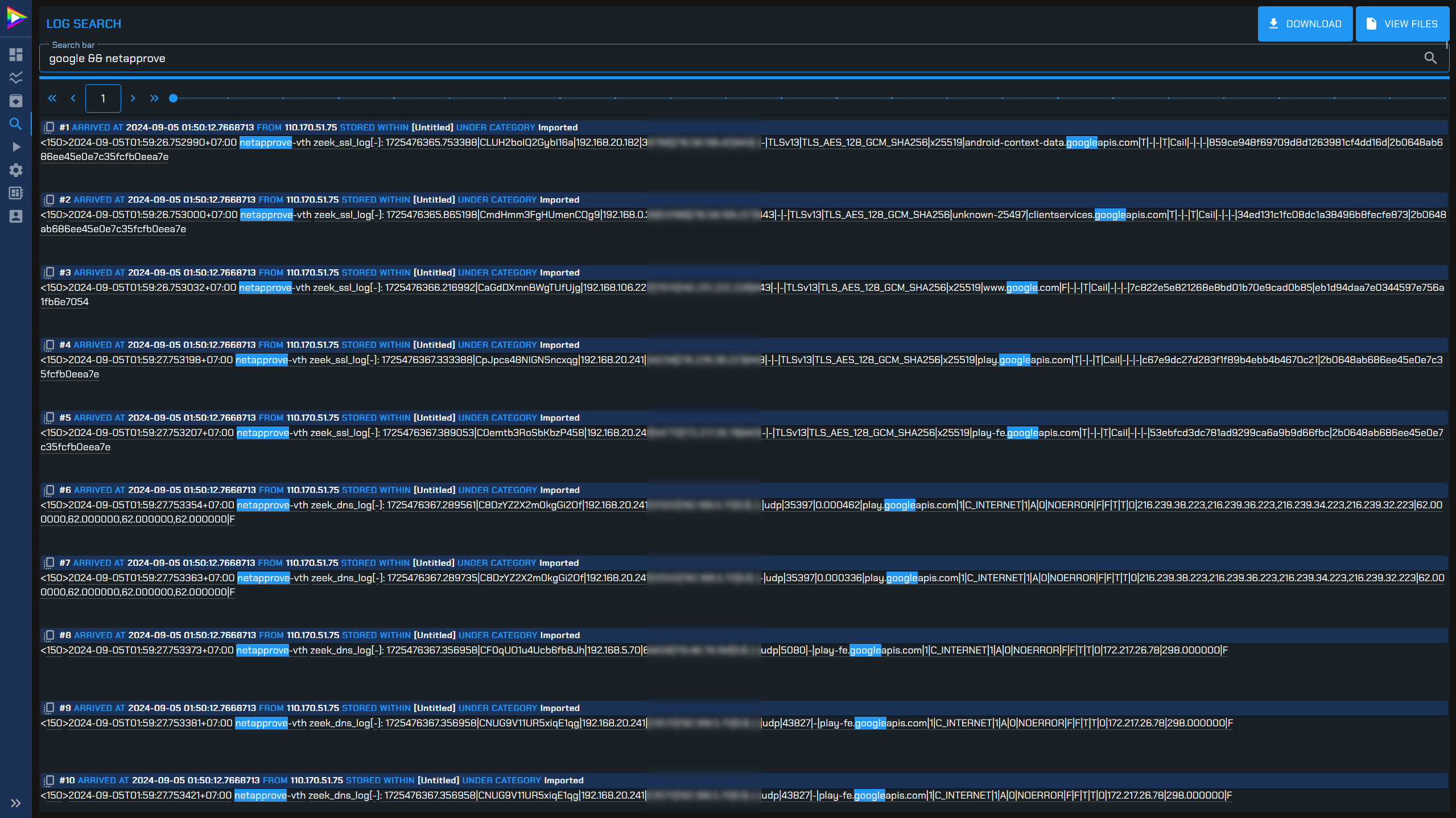
Log Search Interface
Powerful search capabilities for finding specific events and conducting security investigations
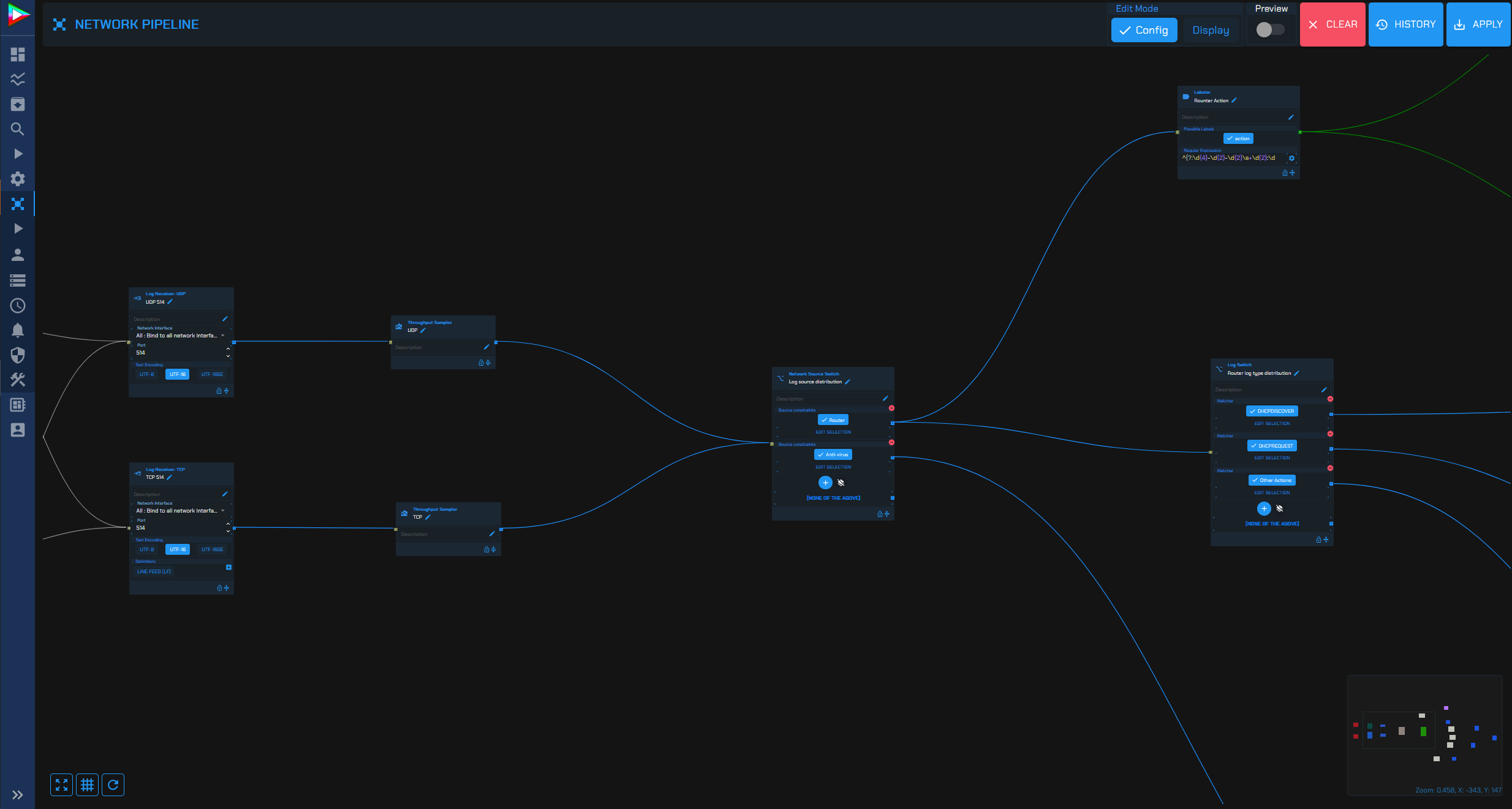
Processing Pipeline Editor
Visual node-based interface for defining and modifying data processing flows
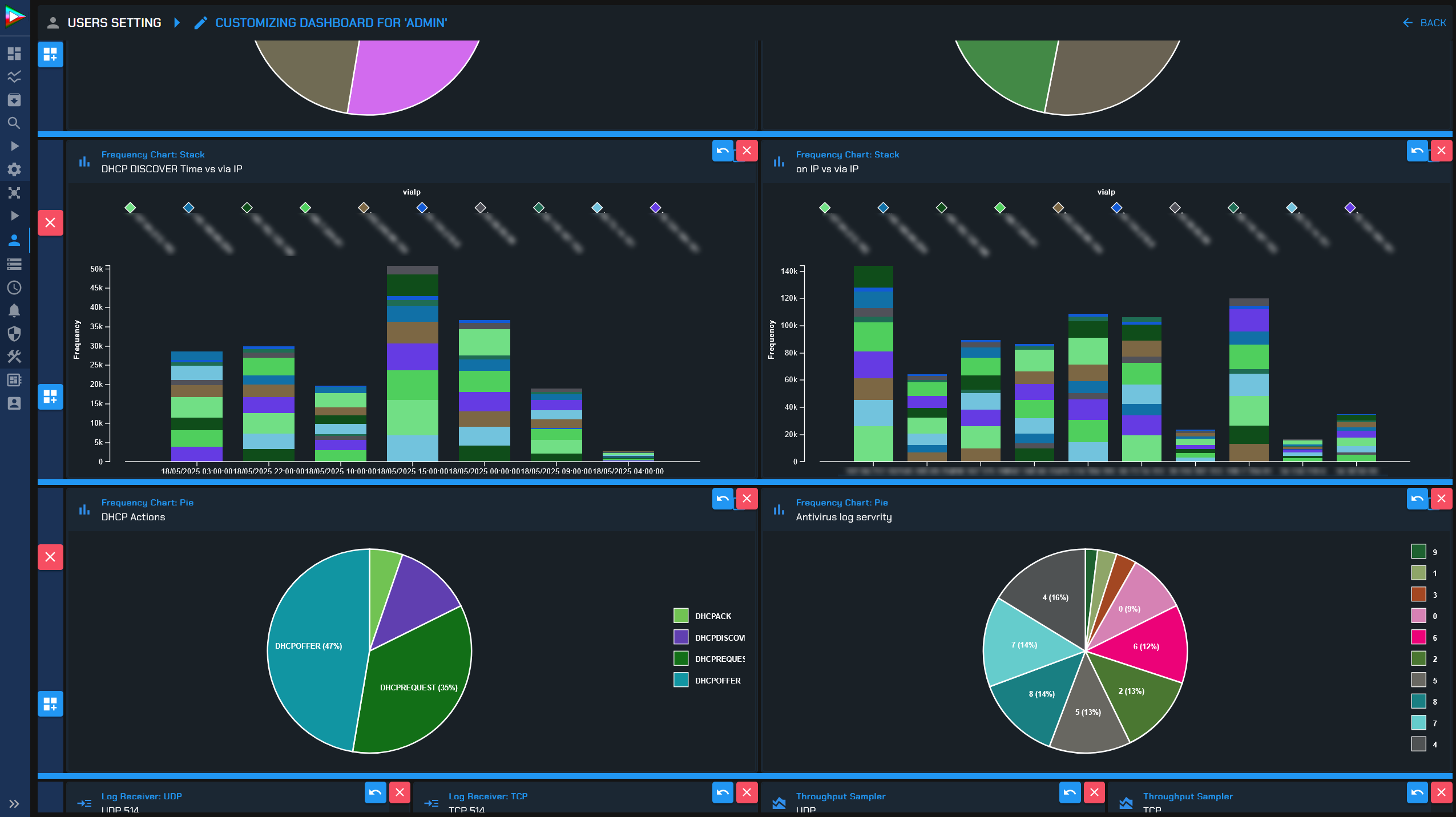
Dashboard Customization
Personalize layouts by selecting and arranging different analytical widgets
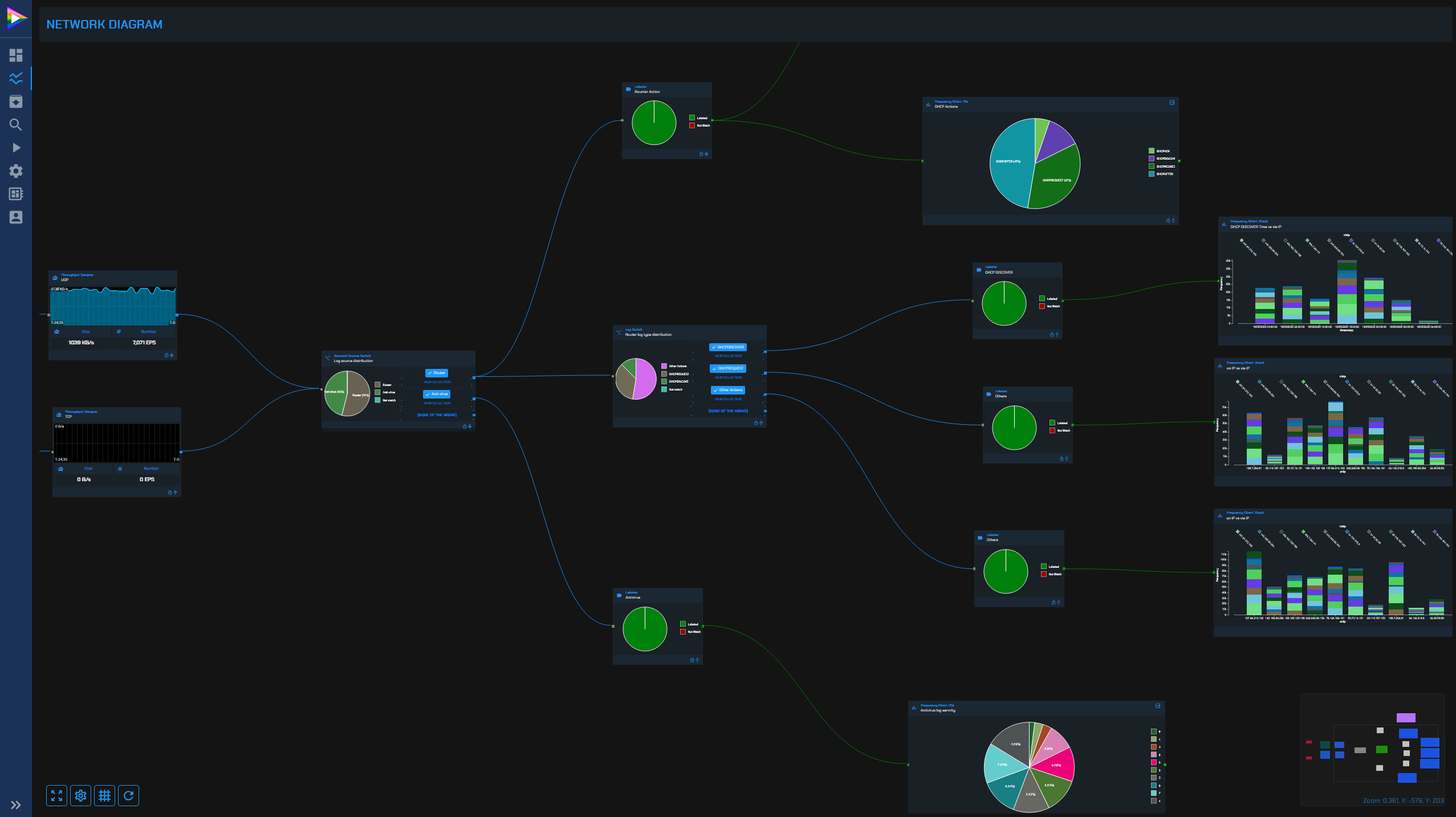
Real-time Log Processing Diagram
High-level visualization of data flow through the entire system
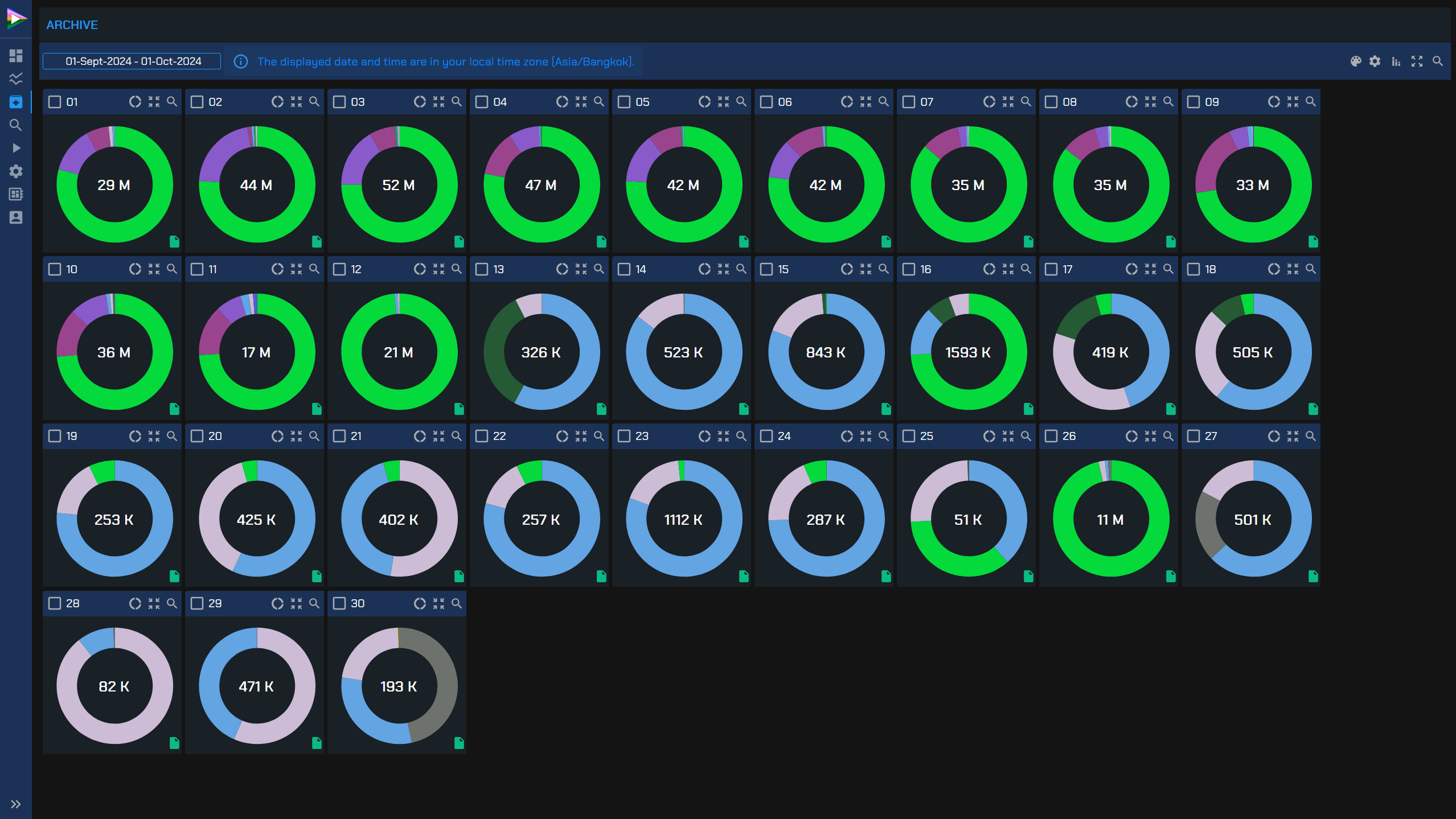
Data Archiving Interface
Browse and access historical log data organized by time segments
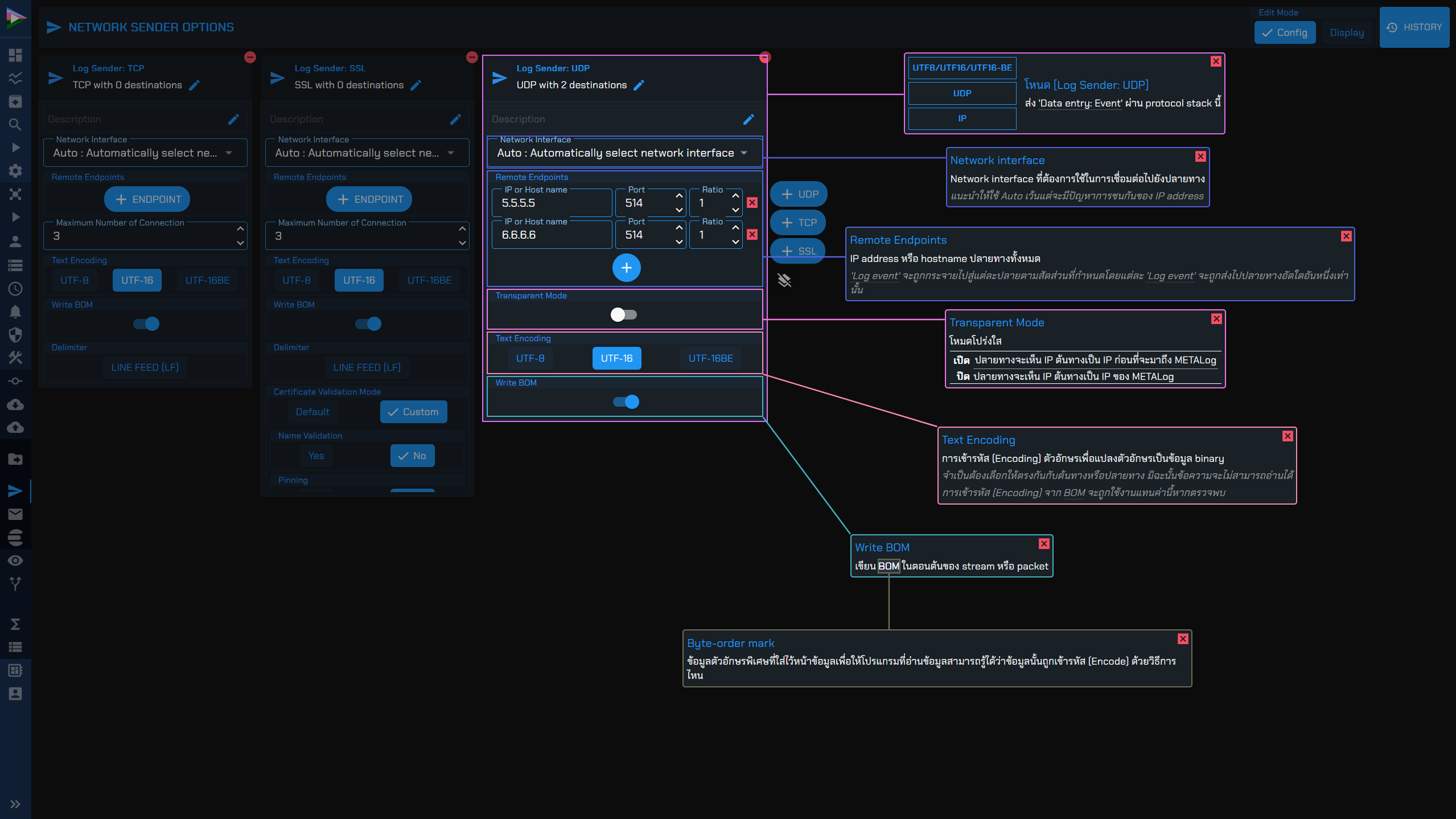
Build-in Manual System
Setup screen with integrated visual help explaining configuration options
Role and Contribution
As the lead developer on this project, I was responsible for the entire development lifecycle:
- Designed the core architecture and data flow of the system
- Implemented the high-performance indexing algorithm from scratch
- Developed the query language parser and execution engine
- Created the node-based processing pipeline UI in Blazor
- Optimized performance for handling terabytes of log data
- Designed the entire UI including the logo design
- Created the built-in context-aware manual system
Challenges and Solutions
This project presented several significant technical challenges:
- Challenge: Handling large volumes of network logs without packet loss
- Solution: Implemented a lock-free SPSC (Single Producer Single Consumer) buffer to allow one thread to focus solely on reading logs from the network and writing them to the buffer, while another thread reads from the buffer and processes them, preventing UDP packet loss during high-volume ingestion
- Challenge: Buffer capacity saturation when log ingestion rate exceeds processing rate
- Solution: Implemented a load balancing algorithm that dynamically adjusts the number of parallel processing threads based on the buffer fill rate, ensuring that processing capacity scales up when network ingestion rates increase, preventing the buffer from growing uncontrollably while maintaining optimal resource utilization
- Challenge: Searching through large number of logs can take a long time, while solutions like ElasticSearch are overkill and consume too many resources
- Solution: Implemented an inverse index system that balances performance between building the index and searching it, ensuring that writing logs quickly is as important as searching them quickly
- Challenge: Custom indexing system requires a specialized query mechanism to fully leverage its capabilities
- Solution: Developed a custom query language that leverages the newest .NET features like SearchValues to efficiently interact with the custom indexing system, complete with query tree optimization for maximum performance
- Challenge: The software contains many features and technical details that require understanding of how the system works, but explaining everything in the UI would show too much information
- Solution: Built a context-aware built-in manual system where users can hold a specific key to highlight components that need explanation. When users click on a highlighted component, a dialog appears with detailed information. Within these dialogs, if there are keywords that need further explanation, users can again hold the key to highlight those words and continue exploring, creating an intuitive learning path through complex features
- Challenge: Available open-source chart libraries weren't suitable for real-time data visualization needs
- Solution: Created a custom visualization library using D3.js for real-time pie and stack charts, providing immediate visual feedback on log processing pipeline performance and data flow
- Challenge: Developing a licensing system requiring a reliable web server that will continue to run throughout the lifetime of the application
- Solution: Implemented a serverless solution using Azure Functions, which provides scalability and reliability with a pay-as-you-go cost model, eliminating the need for maintaining dedicated server infrastructure while ensuring the licensing service remains available 24/7
Technologies Used
C#, .NET 8, .NET 9, Blazor, D3.js, SQLite
Blazor.NavigationStack
Blazor.NavigationStack is an open-source library for Blazor that provides a flexible navigation stack. It helps manage complex navigation while retaining states, making it ideal for wizards, multi-step forms, and nested workflows.
The library includes features such as:
- Push/pop navigation with state preservation
- Support for wizards and multi-step forms
- Customizable UI components (headers, separators, back buttons)
- Type-safe result handling between pages
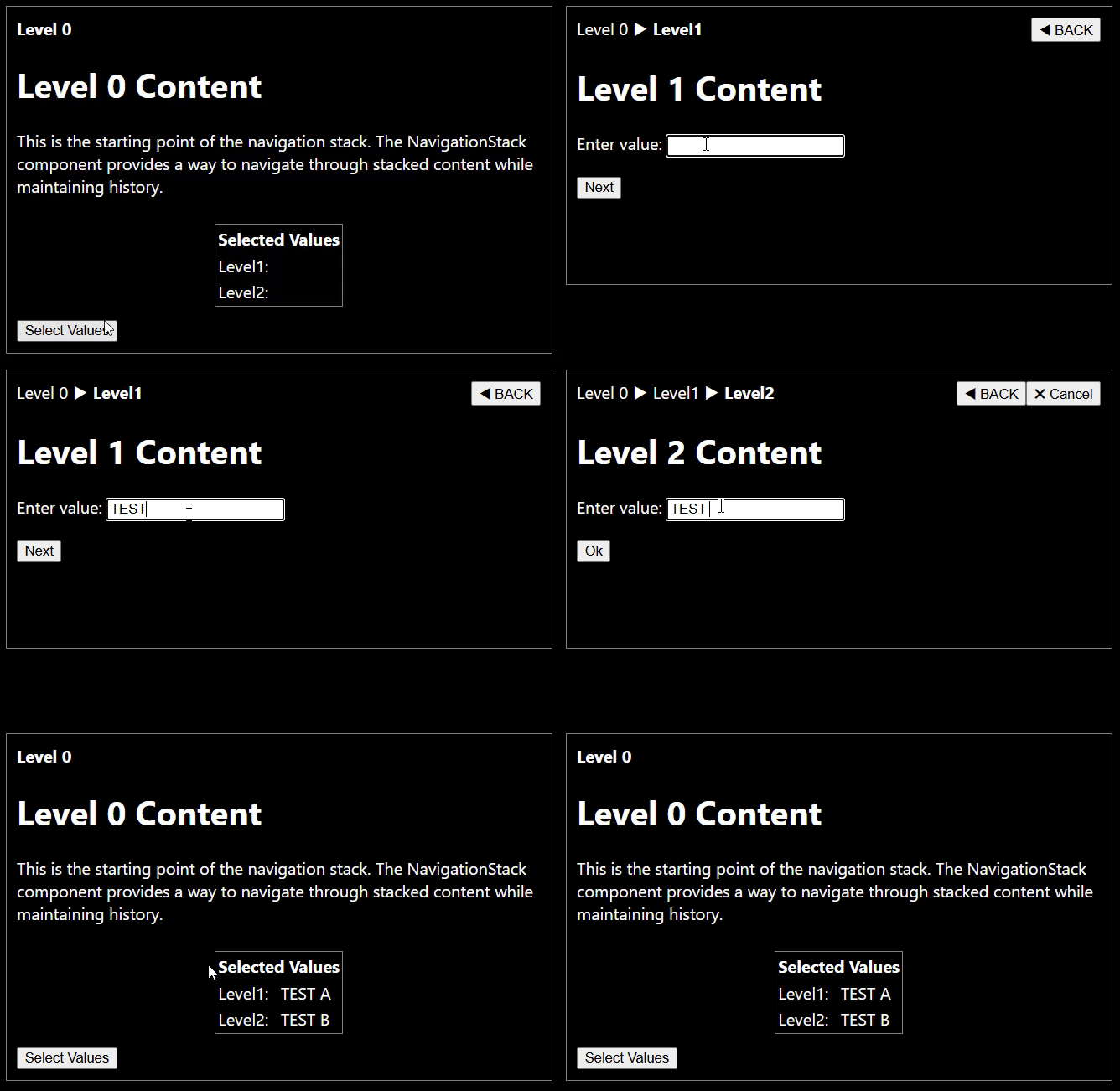
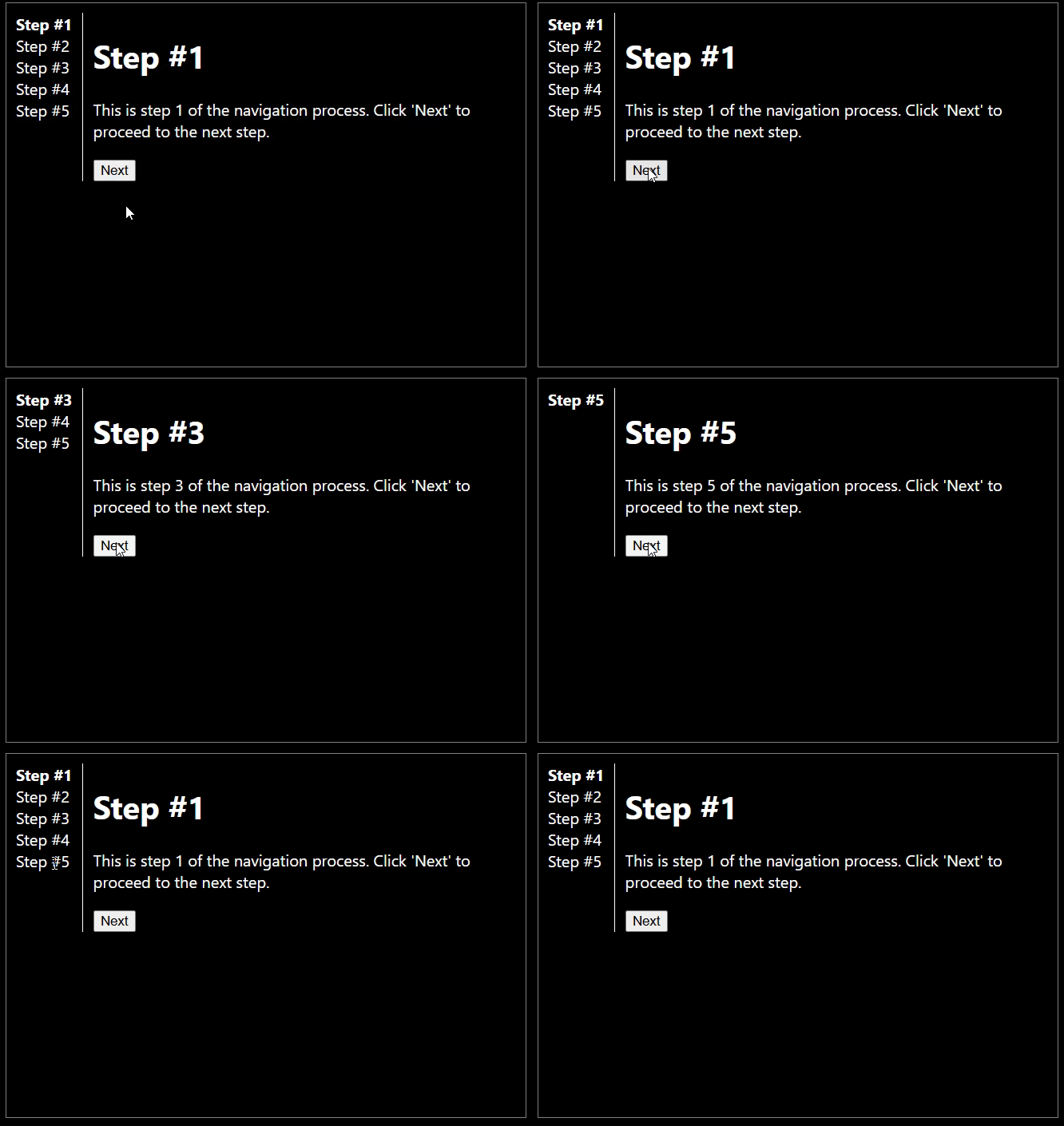
Multi-step Forms
Seamless navigation through multi-step forms while preserving state
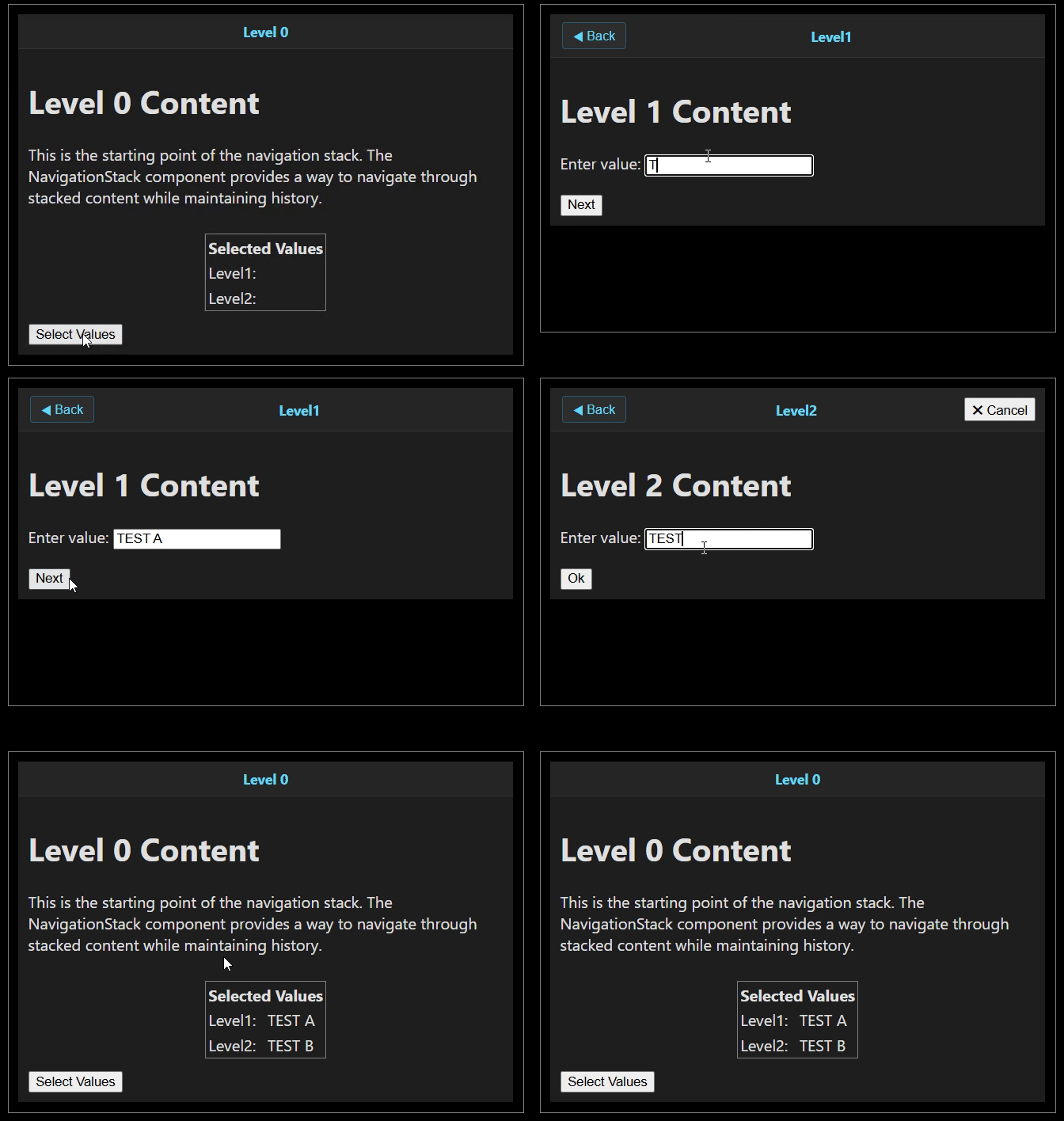
Wizards
Create intuitive wizard interfaces with built-in navigation
Customizable UI
Fully customizable headers, separators, and navigation components
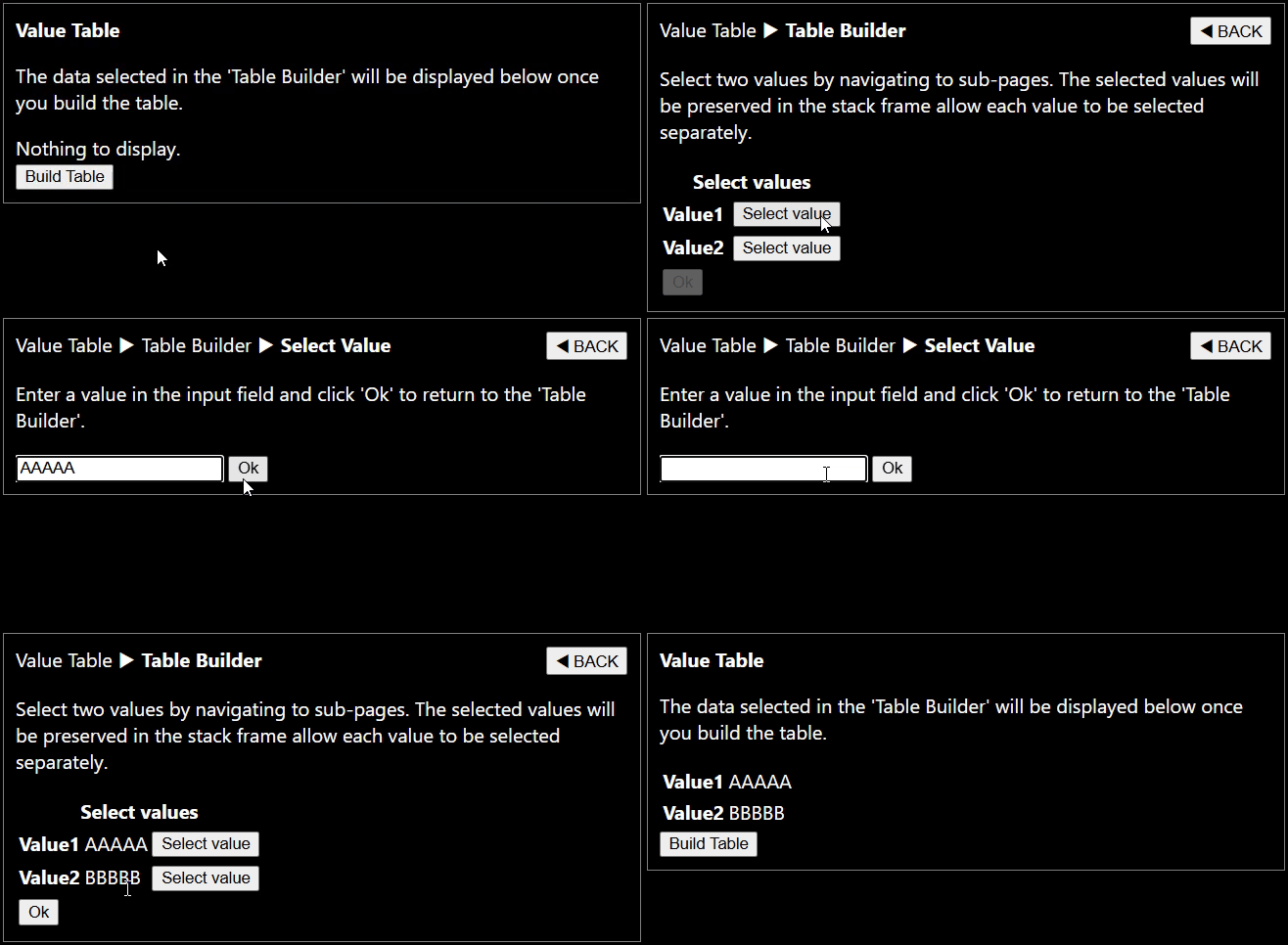
Preserving States
Maintain component states across navigation operations
Role and Contribution
As the sole creator and maintainer of this open-source library:
- Designed the API with a focus on developer experience and ease of use
- Implemented the core navigation stack mechanism and state preservation
- Created comprehensive documentation and usage examples
- Published the library to GitHub and NuGet
- Built a demo site showcasing various use cases
Challenges and Solutions
Developing this library presented unique challenges:
- Challenge: Creating a flexible API that allows users to solve complex page flow problems while maintaining their own implementation style
- Solution: Designed multiple ways to access and interact with the navigation stack (context, cascading parameters, references) and implemented a simple yet powerful interface that provides core functionality without dictating implementation patterns
- Challenge: Enabling deep customization of every component to match the visual style of any project
- Solution: Implemented a comprehensive customization system using RenderFragments and context objects, allowing developers to override the appearance and behavior of every visual element (layout, headers, separators, back button) while maintaining functionality
Technologies Used
C#, .NET, Blazor, GitHub, NuGet, Azure Static Web App
KeyColor
KeyColor is a .NET library that generates unique and consistent colors based on input keys. It's perfect for applications that need deterministic color generation, such as data visualization, user interfaces, and color-coded elements.
Key features include:
- Deterministic color generation from various input types (strings, byte arrays, structs)
- Customizable color parameters (saturation, lightness, brightness)
- High performance and thread-safe operations
- Support for multiple .NET frameworks
- Zero allocation options for performance-critical scenarios
Role and Contribution
As the sole creator and maintainer of this open-source library:
- Designed and implemented the core color generation algorithm
- Optimized performance across multiple .NET frameworks including .NET Standard 2.0 for Unity compatibility
- Created comprehensive documentation and examples
- Published and maintained the package on NuGet
- Implemented unit tests and benchmarks
- Ensured backward compatibility while leveraging modern .NET features
Challenges and Solutions
The project presented several interesting challenges:
- Challenge: Supporting Unity game development through .NET Standard 2.0 while maintaining high performance
- Solution: Implemented a dual-path approach where modern .NET features like Span<T> are used when available, while maintaining a compatible code path for .NET Standard 2.0, ensuring the library works efficiently across all platforms
- Challenge: Generating visually distinct colors that remain consistent across application restarts while ensuring text readability
- Solution: Developed a deterministic algorithm that maps input keys to specific points in the HSL color space, with default settings calibrated to generate colors that maintain sufficient contrast for both black and white text overlay
- Challenge: Optimizing performance for high-throughput scenarios across different frameworks
- Solution: Created framework-specific optimizations using conditional compilation, allowing zero-allocation operations in modern .NET while gracefully falling back to efficient alternatives in .NET Standard 2.0
- Challenge: Ensuring thread safety without compromising performance
- Solution: Designed the static API to be inherently thread-safe while allowing users to create instance-based generators for custom configurations
Technologies Used
C#, .NET 9.0/8.0/7.0/.NET Standard 2.0, BenchmarkDotNet, xUnit
SQL Query Interception System (POC)
This proof-of-concept system acts as middleware between client applications and SQL Server, intercepting SQL traffic in real-time. It can identify the type and content of messages and modify queries according to user configuration.
The system includes:
- Basic MS-TDS protocol parsing and modification
- Message type and content identification
- Query modification capabilities based on configuration
Role and Contribution
As the developer for this proof-of-concept project:
- Researched the MS-TDS protocol specification
- Implemented basic packet interception capabilities
- Developed message type identification functionality
- Created query modification capabilities based on configuration
Challenges and Solutions
This project involved a technical challenge:
- Challenge: Understanding and implementing the MS-TDS protocol with no existing libraries
- Solution: Studied protocol documentation and reverse engineered the MS-TDS protocol through trial-and-error to understand the basics for message type identification and content analysis
Technologies Used
C#, .NET 6, MS SQL Server